
Project Overview
Client: Electricité Du Liban (EDL)
Location: Zouk Mikael Power Plant, Lebanon
Project Type: Hydrogen Plant Installation (Gas Generation & Storage)
Year of Execution: 2018
Scope: Electrolyzer Setup, High-Pressure Storage & Piping
Project Description
In 2018, ISPC executed the turnkey Hydrogen Plant Installation at the Zouk Power Plant. Hydrogen is critical for the efficient cooling of large power generators due to its high thermal conductivity. The project involved replacing the obsolete generation system with a modern, automated hydrogen production facility to ensure a continuous and safe supply of cooling gas for the plant’s turbines.
Scope of Hydrogen Plant Installation
1. Equipment Installation
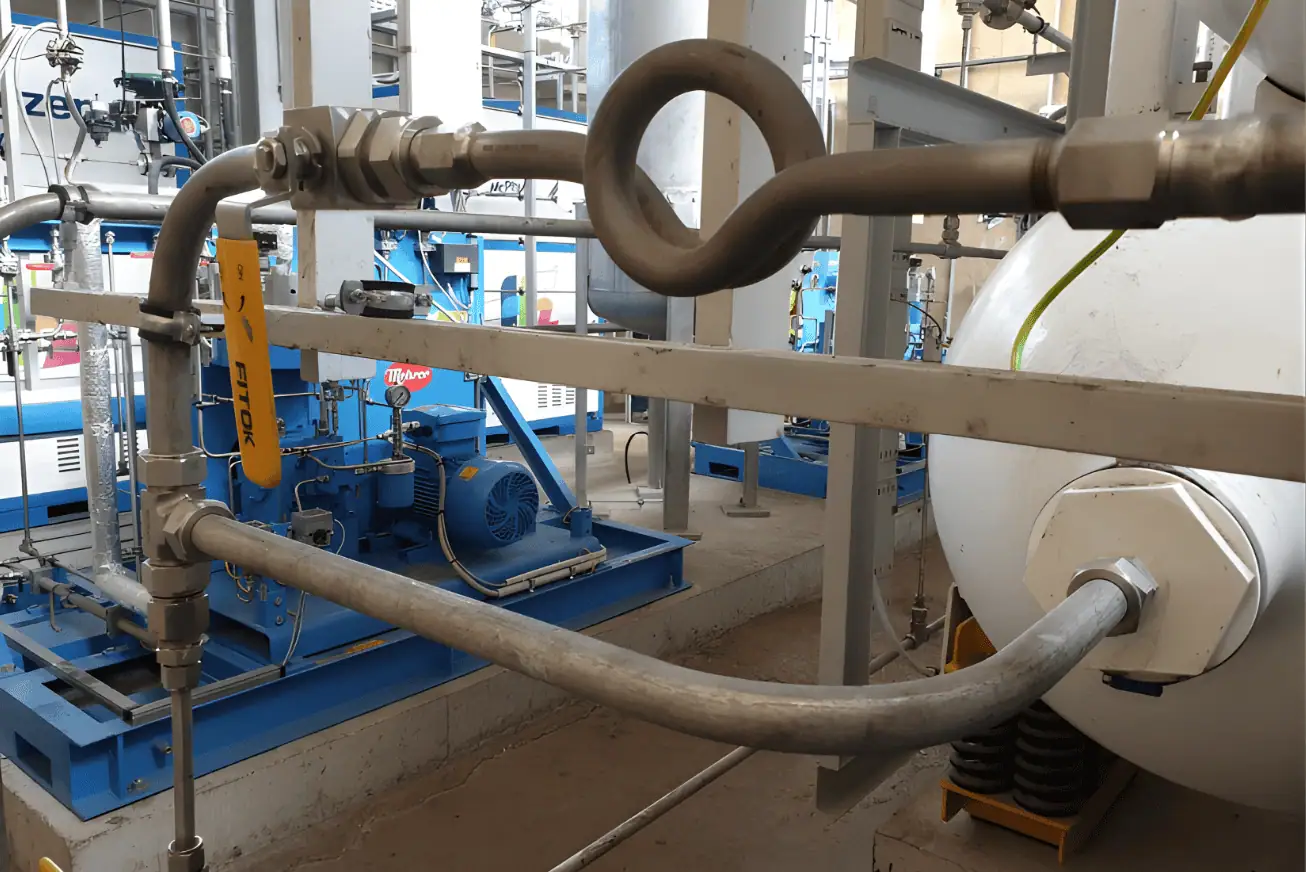
Electrolyzers: Installation of high-efficiency Hydrogen Electrolyzers to produce gas on-site.
Compressors: Erection of diaphragm compressors to boost gas pressure for storage.
Storage Tanks: Installation of high-pressure hydrogen storage cylinders and buffer tanks.
2. Piping & Instrumentation:
Stainless Steel Piping: Fabrication and orbital welding of stainless steel tubing to ensure zero leaks in the high-pressure network.
Explosion-Proof Systems: Installation of ATEX-certified electrical components and instrumentation (sensors, valves) designed for hazardous environments (Zone 1).
3. Safety & Commissioning:
Gas Detection: Integration of sensitive Hydrogen leak detectors linked to the main safety shutdown system.
Pressure Testing: Conducting pneumatic testing with Nitrogen and Helium to verify system integrity before introducing Hydrogen.
Key Challenges & Solutions
Challenge: Hydrogen is highly flammable and elusive, making leak prevention the top priority during the Hydrogen Plant Installation.
Solution: ISPC utilized advanced orbital welding techniques and performed 100% leak testing using helium sniffers to guarantee a hermetically sealed system.
Results
The new plant was successfully commissioned, providing a reliable and autonomous source of cooling gas for the power station generators, eliminating the need for external gas cylinder procurement.